
Follow Seneca Place on Facebook!  Click Here

To see a list of frequently asked questions please Click Here

Seneca Place

Latest News

Latest News

Dance Your Way to Better Brain Health!

August 7, 2023

JOIN A DANCE CLASS TO EXERCISE YOUR BRAIN AND BODY.

Exercise is not only good for your body, it’s good for your brain! Sticking to a regular workout plan can be tough, but including activity in your routine doesn’t need to be boring. Scientists have found that the areas of the brain that control memory and skills such as planning and organizing improve with exercise.1,2 Dance has the added dimensions of rhythm, balance, music, and a social setting that enhances the benefits of simple movement – and can be fun!

THE SCIENCE OF DANCE

At the University of Illinois at Chicago, through the CDC-funded Prevention Research Centers’ Healthy Brain Research Network, researchers designed a Latin ballroom dance program for older sedentary adults. Participants in the program, BAILAMOS©, reported improvements in memory, attention, and focus.3 In a separate ballroom dance program, older people experiencing mild cognitive impairment improved their thinking and memory after a 10-month-long ballroom dancing class.4

SO, HOW CAN YOU GET MOVING?

  • Sign up for a dance class and invite your friends to join. Find classes at your local community college, YMCA, dance studio, or community center.
  • Try dancing at home by following along with a DVD or videos on YouTube. Easy-to-follow, free exercise videos are available at the National Institute on Aging’s YouTube channel.
  • For an extra challenge, try using small weights to build strength. Keep a 2-pound or 5-pound weight in each hand while doing your dance routine. For more ideas on strength exercises, visit the Exercise and Physical Activity page on the NIH website.

Help for Caregivers of People with Alzheimer’s – Are you a caregiver for someone with Alzheimer’s disease or a related dementia? You can help the person you care for get moving, too.5

  • Split dance moves and exercises into small, easy-to-follow steps. Use exercise videos and follow along with the person you’re caring for.
  • At first, try shorter 5- or 10-minute mini dancing sessions to slowly build endurance.
  • Take breaks when needed and make sure you are both drinking plenty of water.

To learn more, please visit https://www.cdc.gov/aging/publications/features/alzheimers-and-exercise.html.

Success Story: Anna Beasley

August 2, 2023

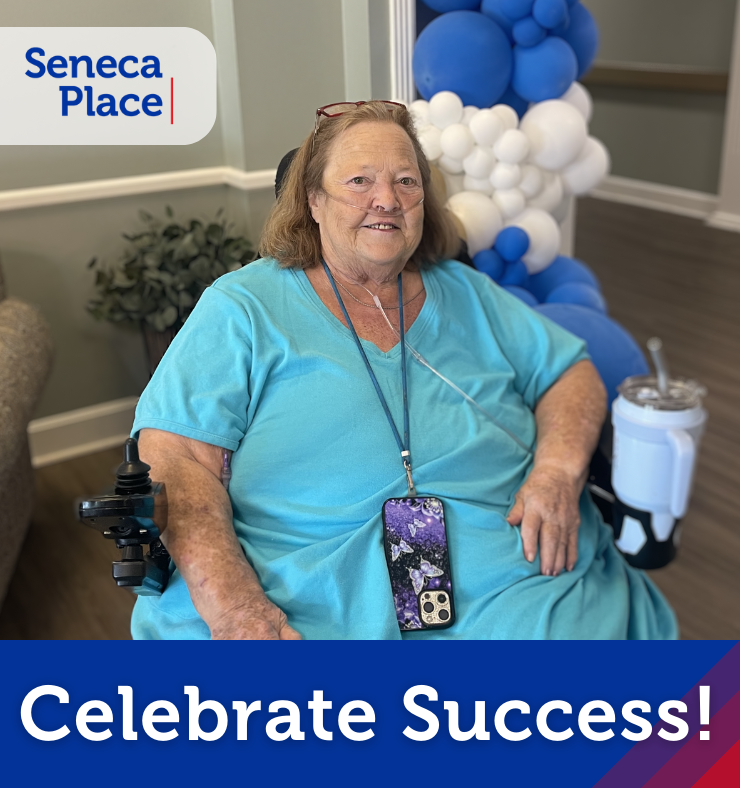
Seneca Place is excited to shine the spotlight on resident Anna Beasley’s Success Story!

Anna was admitted to Seneca Place on May 08, 2023, under the care of Dr. Moutaz Al Nabhan.
During the course of her stay, Occupational Therapy and Physical Therapy were initiated to efficiently and effectively identify Anna’s unique needs and tailor specialized treatment plans to successfully transition her to the next level of care. Our therapy team provided skilled interventions to address the adaptation, compensation, and restoration potential of Anna and coordinated with her interdisciplinary team to ensure appropriate clinical care areas were addressed. On May 24, 2023, Anna Beasley was successfully discharged to long-term care! Anna said, “I want to thank everyone here who helped me get stronger and go home. Therapy was great! Bless you all.” Congratulations to Anna and her Care Team on their success!

National Healthy Brain Initiative

July 31, 2023

The Healthy Brain Initiative improves understanding of brain health as a central part of public health practice. The initiative creates and supports partnerships, collects and reports data, increases awareness of brain health, supports populations with a high burden of Alzheimer’s disease and related dementias, and promotes the use of its Road Map series: State and Local Public Health Partnerships to Address Dementia: The 2018–2023 Road Map, and the Healthy Brain Initiative Road Map for Indian Country. The Road Map series provides actionable steps to promote brain health, address cognitive impairment, and address the needs of caregivers. In addition, the Healthy Brain Initiative supports the development of future Road Maps.

CDC is working with funded partners to accomplish the Road Map’s recommended actions. For example, the Alzheimer’s Association helps develop and track Road Map action items, and helps state public health agencies use them. Given that one out of every three American Indian and Alaskan Native elders develops dementia, the Association for State Territorial Health Officials (ASTHO) developed a series of health communication materials to improve quality, availability, and accessibility of public health resources to address the connection between brain health and heart health, Healthy Heart, Healthy Brain.

To learn more, please visit https://www.cdc.gov/aging/nationalinitiatives/national-healthy-nhbi.html.

Mental Health and Aging

July 24, 2023

Mental health is important at every stage of life and it includes emotional, psychological, and social well-being.  As people age, they may experience certain life changes that impact their mental health, such as coping with a serious illness or losing a loved one. Although many people will adjust to these life changes, some may experience feelings of grief, social isolation, or loneliness. When these feelings persist, they can lead to mental illnesses, such as depression and anxiety.  Effective treatment options are available to help older adults and people at every stage of life to manage their mental health and improve their quality of life. Recognizing the signs and seeing a health care provider are the first steps to getting treatment.

Depression and Aging

Depression is not a normal part of growing older

Depression is a true and treatable medical condition, not a normal part of aging. However older adults are at an increased risk for experiencing depression. If you are concerned about a loved one, offer to go with him or her to see a health care provider to be diagnosed and treated.

Depression is not just having “the blues” or the emotions we feel when grieving the loss of a loved one. It is a true medical condition that is treatable, like diabetes or hypertension.

How do I know if it’s Depression?

Someone who is depressed has feelings of sadness or anxiety that last for weeks at a time. He or she may also experience–

  • Feelings of hopelessness and/or pessimism
  • Feelings of guilt, worthlessness and/or helplessness
  • Irritability, restlessness
  • Loss of interest in activities or hobbies once pleasurable
  • Fatigue and decreased energy
  • Difficulty concentrating, remembering details and making decisions
  • Insomnia, early–morning wakefulness, or excessive sleeping
  • Overeating or appetite loss
  • Thoughts of suicide, suicide attempts
  • Persistent aches or pains, headaches, cramps, or digestive problems that do not get better, even with treatment

How is Depression Different for Older Adults?

  • Older adults are at increased risk. We know that about 80% of older adults have at least one chronic health condition, and 50% have two or more. Depression is more common in people who also have other illnesses (such as heart disease or cancer) or whose function becomes limited.
  • Older adults are often misdiagnosed and undertreated. Healthcare providers may mistake an older adult’s symptoms of depression as just a natural reaction to illness or the life changes that may occur as we age, and therefore not see the depression as something to be treated. Older adults themselves often share this belief and do not seek help because they don’t understand that they could feel better with appropriate treatment.

How do I Find Help?

Most older adults see an improvement in their symptoms when treated with antidepression drugs, psychotherapy, or a combination of both. If you are concerned about a loved one being depressed, offer to go with him or her to see a health care provider to be diagnosed and treated.

If you or someone you care about is in crisis, please seek help immediately.

To learn more, please visit https://www.cdc.gov/aging/olderadultsandhealthyaging/mental-health-and-aging.html.

Success Story: Rosemarie Robinson

July 13, 2023

Seneca Place is excited to share resident Rosemarie Robinson’s Success Story!

Ms. Robinson came to Seneca Place for rehabilitation and was recently able to discharge home! She said, “The therapy staff will inspire you to get better! Now I can walk which I didn’t think that I would be able to again. Mike, Brad, Debbie and Bruce made my rehab time as pleasant as possible.” Mrs. Robinson wants to encourage other residents to not give up. “I am very thankful from the bottom of my heart to you all in therapy.” Congratulations to Ms. Robinson and her Care Team on their success!

Social Determinants of Health and Alzheimer’s Disease in Older Adults

July 10, 2023

The conditions in places where people are born, live, learn, work, and play are known as social determinants of health (SDOH). These conditions can have a profound effect on a person’s health, including their risk for Alzheimer’s disease and related dementias.

Differences in SDOH contribute to the stark and persistent chronic disease disparities in the United States among racial, ethnic, and socioeconomic groups by systematically limiting opportunities for members of some groups to be healthy. While public health crises and economic uncertainty may focus attention on disparities, health inequities have persisted across generations because policies and practices have systematically limited access to health care and other opportunities.

A growing body of work exists around social and economic factors that may contribute to a person’s health status, including a person’s risk for dementia. Although more work needs to be done to determine the exact relationship between these factors and dementia, here are a few areas that could be considered:

Education

Studies show an association between a higher level of education and better brain health. For example, among adults aged 45 years or older, the proportion experiencing subjective cognitive decline was lowest for college graduates and nearly three times greater for those without a high school diploma. One theory being considered by researchers as to why education levels may affect the risk of developing dementia has to do with cognitive reserve. Cognitive reserve refers to the level of knowledge and education “banked” in early years that may protect and compensate for a decline in cognitive health in later years.

Access to Health Care

Access to health care affects many facets of a person’s physical and brain health. Consistent access to health care services gives people the opportunity for regular preventive health services and early diagnosis of many health conditions, such as diabetes, heart disease, and dementia. Access can also help prevent hospitalizations through the successful management of chronic health conditions. People with dementia often have one or more other chronic health conditions, and care coordination with providers and family care partners is essential to better care and improves health outcomes.

Built Environment

The built environment is the physical environment around us. It includes the spaces where we live, learn, work, and play—our homes, schools, businesses, streets and sidewalks, open spaces, and the options people have for transportation. Built environments can influence overall community health and individual behaviors, such as physical activity and healthy eating. Built environments can affect health both positively and negatively. Healthy community design can improve opportunities for exercise, access to services, and community supports—all of which have a positive impact on brain and physical health.

Loneliness and Social Isolation

A number of studies indicate that maintaining strong social connections and keeping mentally active as we age may lower the risk of cognitive decline and dementia. Experts are not certain about the reason for this association, but it may be due to a strengthening of connections between nerve cells in the brain.

Although it’s hard to precisely measure social isolation and loneliness, there is strong evidence that many adults aged 50 and older are socially isolated or lonely in ways that put their health at risk. Recent studies found that:

  • Social isolation significantly increased a person’s risk of premature death from all causes, a risk that may rival those of smoking, obesity, and physical inactivity.1
  • Social isolation was associated with about a 50% percent increased risk of dementia.1
  • Poor social relationships were associated with a 29% increased risk of heart disease and a 32% increased risk of stroke.1
  • Loneliness was associated with higher rates of depression, anxiety, and suicide.1

1National Academies of Sciences, Engineering, and Medicine. 2020. Social Isolation and Loneliness in Older Adults: Opportunities for the Health Care System. Washington, DC: The National Academies

To learn more, please visit https://www.cdc.gov/aging/disparities/social-determinants-alzheimers.html.

Caregiving for a Person with Alzheimer’s Disease or a Related Dementia

June 26, 2023

What is Alzheimer’s Disease?

Alzheimer’s disease is the most common form of a group of brain diseases called dementias. Alzheimer’s disease accounts for 60% to 80% of dementia cases. Other forms of dementia include vascular dementia, mixed dementia, dementia with Lewy bodies, and frontotemporal dementia.

Alzheimer’s disease, like all dementias, gets worse over time and there is no known cure. Nearly 6 million Americans are living with Alzheimer’s disease. Alzheimer’s disease destroys brain cells causing problems with memory, thinking, and behavior that can be severe enough to affect work, lifelong hobbies, and social life. Eventually, it can affect one’s ability to carry out routine daily activities. Today, it is the sixth leading cause of death in the United States. It is the fifth leading cause of death for those aged 65 years and older.

For more information, see www.alz.org/alzheimers-dementia/facts-figuresexternal icon.

What is known about caregiving for a person with Alzheimer’s disease or another form of dementia?

People with Alzheimer’s disease and related dementias are usually cared for by family members or friends. The majority (80%) of people with Alzheimer’s disease and related dementias are receiving care in their homes. Each year, more than 16 million Americans provide more than 17 billion hours of unpaid care for family and friends with Alzheimer’s disease and related dementias. In 2019, these caregivers will provide an estimated 18.5 billion hours of care. Approximately two-thirds of dementia caregivers are women, about one in three caregivers (34%) is age 65 or older, and approximately one-quarter of dementia caregivers are “sandwich generation” caregivers, meaning that they care not only for an aging parent, but also for children under age 18.

Caregivers of people with Alzheimer’s and related dementias provide care for a longer duration than caregivers of people with other types of conditions (79% versus 66%). Well over half (57%) of family caregivers of people with Alzheimer’s and related dementias provide care for four years or more. More than six in ten (63%) Alzheimer’s caregivers expect to continue having care responsibilities for the next 5 years compared with less than half of caregivers of people without dementia (49%).

The demands of caregiving can limit a caregiver’s ability to take care of themselves. Family caregivers of people with Alzheimer’s and related dementias are at greater risk for anxiety, depression, and poorer quality of life than caregivers of people with other conditions.

To learn more, please visit https://www.cdc.gov/aging/caregiving/alzheimer.htm.

Older Adults and Extreme Heat

June 12, 2023

People aged 65 or older are more prone to heat-related health concerns. Older adults can’t adjust to sudden temperature changes as fast as younger people. This may happen because of certain medicines they take or chronic illnesses that affect their ability to regulate body temperature. When not treated properly, heat-related illnesses can lead to death. But you can take steps to stay cool during hot weather.

SIGNS AND SYMPTOMS OF HEAT-RELATED ILLNESS

If your body becomes overheated, you can be in danger of heat-related illness. These illnesses can includeexternal icon :

  • Heat syncope, or sudden dizziness.
  • Heat cramps.
  • Heat edema, or swelling in your legs and ankles.
  • Heat exhaustion—when your body can no longer stay cool. This often appears as feeling thirsty, dizzy, weak, uncoordinated, or nauseated. You may sweat a lot and have cold and clammy skin or a rapid pulse.
  • Heat stroke, which is a medical emergency. Signs can include fainting, behavior changes, high body temperature (over 104° F), dry skin, a strong and rapid pulse, a slow and weak pulse, and no longer sweating even though it’s hot.

HOW TO STAY COOL IF YOU ARE AN OLDER ADULT

  • Drink water regularly. Do NOT wait until you’re thirsty to start drinking water.
  • Avoid using your oven or stove to prepare meals.
  • Wear loose-fitting clothes.
  • Take showers to cool down.
  • Maintain the heating and air conditioning system in your home, so your home cools properly.
  • If you don’t have air conditioning, consider staying with a friend or family member during a heatwave. It may be enough to take an “air conditioning break” at a local mall or library during the heat of the day.
  • Don’t overwork yourself, and make sure you rest.
  • Have others check up on you, and vice versa.
  • Wear sunscreen and clothing to protect yourself from sunburns, which make it hard for your body to cool down.
  • When outside in the heat, wear a hat, try to stay in the shade, and move slowly so you won’t become overheated.

Seek medical care immediately if you have symptoms of heat-related illness like muscle cramps, dizziness, headaches, nausea, weakness, or vomiting.

HOW TO HELP AN OLDER ADULT AVOID HEAT-RELATED ILLNESS

As a friend, family member, or caregiver, you can help an older adult avoid heat-related illness during the warmer months. Some things you can do are:

  • Know what medicines they are taking and find out if they affect body temperature.
  • Call or connect regularly and ask if they are cool enough. Listen for patterns or shared concerns. Consider having a remote body or home temperature sensor or monitor installed.
  • If you don’t live nearby, have the contact information for someone who does and who can regularly check in on them.
  • Complete a care plan together to provide structure and direction. The care plan should include ways to stay cool during extreme heat and should note if any medicines the person takes may affect body temperature regulation.
  • If you are the one checking in on older adult, make sure they
    • Stay hydrated
    • Have the living space set to a comfortable temperature
    • Know how to stay cool during extreme heat
    • Don’t show signs of heat stress
  • Seek medical care immediately if the person has symptoms of heat-related illness like muscle cramps, dizziness, headaches, nausea, weakness, or vomiting.

HOW TO HELP SOMEONE WITH DEMENTIA AVOID HEAT-RELATED ILLNESS

About 25% of people with dementia live alone, and they may not always have awareness about their surroundings. Learn how to make a home safety checklistexternal icon for someone with Alzheimer’s or related dementias. During the warmer months:

  • If the person is using a portable fan, make sure that objects can’t be placed in the blades. Place fans near electrical outlets to avoid using an extension cord. If an extension cord must be used, attach it to the baseboards to reduce the risk of tripping.
  • Install alarms that alert you if a door or window is opened. This can reduce the risk of wandering in hot weather and keep cool air inside the home.
  • Fence off swimming pools with a locked gate, cover if possible, and closely monitor the person when they are in the pool.
  • Hide an extra key outside the home in case the person with dementia locks the door and a caregiver or emergency responder needs to get inside.
  • Keep a list of all medicines the person takes and ask the doctor if any of them increase the risk of becoming overheated.

To learn more, please visit https://www.cdc.gov/aging/emergency-preparedness/older-adults-extreme-heat/index.html.

National Healthcare Recruiter Recognition Day: Meet the Team

June 6, 2023

Happy National Healthcare Recruiter Recognition Day to our AMAZING Talent Acquisition team! These individuals go above and beyond for our communities every single day. Learn more about the team:

Laurel Lingle

Vice President of Talent Acquisition

Being in Senior Care for over 20 years continues to be a passion of mine. Knowing every hire makes a difference in our residents’ lives keeps me energized and passionate about my work. Bluegrass is a place that allows you to have a seat at the table and really contribute to how we adapt to the change of our labor market. We continue to strive to be the best Senior Care provider by ensuring our Care Team members are provided a positive work environment.


Linda Barnoski

Director of Talent Acquisition

“I have been working in Senior healthcare for over 25 years and I love being apart of providing the best care to our local seniors. I feel supported because our leadership team guides, supports and encourages us all to live our mission every day. What I love most about Bluegrass is that we are a great team that strives to make positive impact in our communities and care for those in need. We believe and live our mission of Leading with Love every day.”


Cindy Beasley

Talent Acquisition Sourcer

I love being able to assist candidates find a new position as well as helping our locations get to the proper staffing numbers needed to make the building run smoothly. We have a wonderful supervisor Laurel and everyone on the team has been very helpful in making sure we keep the recruiting process flowing. I love being part of a team that leads with love!

Barriers to Equity in Alzheimer’s and Dementia Care

June 5, 2023

People of color face discrimination when seeking health care for Alzheimer’s disease and related dementias. Findings from two national surveys conducted by the Alzheimer’s Association show that Black Americans reported the highest level of discrimination in dementia health care followed by Native Americans, Asian Americans, and Hispanic Americans.

Special Report on Race, Ethnicity and Alzheimer’s in America pdf icon[PDF–787 KB]external icon from the Alzheimer’s Association shows these populations reported higher rates of discrimination when seeking health care than non-Hispanic White Americans:

  • 50% of Black Americans.
  • 42% of Native Americans.
  • 34% of Asian Americans.
  • 33% of Hispanic Americans.

Non-Hispanic White Americans reported discrimination at a much lower rate of 9%.

With the projected increases in Alzheimer’s disease among minority populations, it is more important to address these care inequities.

Elements of Cultural Competence

  • A culturally diverse staff that reflects the population served.
  • Ability to overcome language barriers, either with bilingual staff or interpreters.
  • Training for providers on the cultures and languages represented in the population.
  • Patient materials and practice signage that are translated and sensitive to cultural norms.

Hispanics and African Americans, for example, will see the largest increases in Alzheimer’s disease and related dementias in the future. By 2060, the number of Alzheimer’s disease cases is predicted to rise to an estimated 14 million people, with minority populations being affected the most.1

  • Cases among Hispanics will increase seven times over today’s estimates.
  • Cases among African Americans will increase four times over today’s estimates.

What Is a Health Disparity?

A health disparity is when a group of people experience a higher rate of illness, injury, disability, or death than another group.

Health disparities can have a profound, negative effect on entire populations or individual communities. Dementia care and support services can vary widely depending on race, ethnicity, geography, and social and economic factors. Stigma, cultural differences, awareness, and understanding about Alzheimer’s disease and related dementias can all be factors leading to health disparities. In addition, the ability for a person to get a diagnosis, manage the disease, and be able to access quality health care contribute to health disparities.

These disparities reach beyond clinical care to include uneven representation of Black, Hispanic, Asian, and Native Americans in Alzheimer’s research in clinical trials.

Alzheimer’s Caregivers Also Face Discrimination

The surveys show that among non-White caregivers, half or more say they have also faced discrimination when navigating health care settings for their care recipient. Their top concern being that providers or staff do not listen to what they are saying because of their race, color, or ethnicity. This concern was especially high among Black caregivers (42%), followed by Native American (31%), Asian American (30%), and Hispanic (28%) caregivers. Fewer than 1 in 5 White caregivers (17%) expressed this view.

Health Disparity vs. Health Care Disparity

Health disparity: a higher burden of illness, injury, disability, or mortality experienced by one group relative to another.

Health care disparity: differences between groups in health insurance coverage, access to and use of care, and quality of care.

Both: differences that are not explained by variations in health needs, patient preferences or treatment recommendations and are closely linked with social, economic and/or environmental disadvantage.

Lack of Diversity Among Health Care Staff Creates Barriers

Understanding how different racial and ethnic groups view, access, and experience health care is critical to improving the health care system and helping health providers care for an increasingly diverse population. It is projected that people of color will account for over half (52%) of the population in 2050.

Characteristics of health care systems that contribute to disparities should be acknowledged. These include implicit bias on the part of health care providers. Cultural and language barriers can also hinder patient-provider relationships.

Minority Populations Desire Health Care Providers Who Understand Their Ethnic or Racial Background

Given their own experiences with discrimination, it is not surprising that non-White racial/ethnic populations feel it is important for Alzheimer’s and dementia care providers to be more culturally competent. Responses from surveys indicate a strong desire for dementia health care providers who understand different racial and ethnic backgrounds, but many survey respondents say access to these providers is lacking.

As shown in the graphic from the Alzheimer’s Association Special Report, 92% of Native Americans say they want dementia health care providers who understand their ethnic background, yet only 47% have confidence they currently have access to them. Black Americans, Hispanic Americans, and Asian Americans felt similar.

Graphic used with permission from the Alzheimer’s Association, 2021 Alzheimer’s Disease Facts and Figures, Special Report: Race, Ethnicity and Alzheimer’s in America pdf icon[PDF–787 KB]external icon. Accessed March 31, 2021.

A Path Forward—Bridging Racial and Ethnic Barriers in Alzheimer’s and Dementia Care

Findings from the Alzheimer’s Association surveys indicate that, despite ongoing efforts to address health and health care disparities in Alzheimer’s and dementia care, there is still much work to do.

Based on the surveys’ findings, paths forward should address three areas:

  1. Preparing the workforce to care for a racially and ethnically diverse older adult population.
    1. This includes cultural competence education, and training providers to recognize and overcome implicit bias. (See sidebar: Elements of Cultural Competence)
  2. Increasing diversity among providers for dementia care.
    1. Currently, only 1 in 3 US physicians are Black, American Indian or Alaska Native, Hispanic, or Asian. Primary care is more diverse with approximately 40% of physicians coming from diverse racial and ethnic backgrounds. Ensuring diversity in these frontline providers may help reduce future disparities in dementia care. Developing a workforce that reflects the demographics of individuals with Alzheimer’s disease or other dementias should begin during outreach and recruitment to training programs, continue with programming designed to support racially and ethnically diverse students during their training years, and extend to offering residency opportunities in health care settings that treat diverse populations. In addition, hiring practices should consider diversity and inclusion to meet the needs of local patient populations.
  3. Engaging, recruiting, and retaining diverse populations in Alzheimer’s research and clinical trials.
    1. A critical first step to increase diverse participation and representation in clinical research is building and restoring trust in underrepresented communities. One way to do so is through community-based organizations and other respected local partners. The Healthy Brain Initiative State and Local Public Health Partnerships to Address Dementia: 2018–2023 Road Map, launched in partnership with the Alzheimer’s Association and the Centers for Disease Control and Prevention (CDC), is organized around a core principle of “eliminating disparities and collaborating across multiple sectors.”

To learn more, please visit https://www.cdc.gov/aging/publications/features/barriers-to-equity-in-alzheimers-dementia-care/index.html.